Your LinkedIn DMs are dying in someone’s inbox right now.
Not because your offer is weak. Not because you targeted the wrong person. But because your message reads exactly like the forty-three others they scrolled past this morning.
If you want to improve your LinkedIn outreach in 2025, personalization isn’t a nice-to-have—it’s the only way your message survives first contact. The solution? AI-powered personalization that scales genuine connection without the soul-crushing tedium of researching every single prospect. Modern AI-powered LinkedIn automation combines workflow intelligence with natural-sounding messaging to achieve exactly this balance.
Why AI-Personalized LinkedIn Outreach Works Better in 2025
LinkedIn outreach has hit an inflection point.
Cold emails? Five percent response rate if you’re lucky. LinkedIn messages? Ten to fifteen percent for competent campaigns. Hyper-personalized sequences pushed by top performers? Twenty-five percent and climbing.
The gap isn’t about volume. It’s about relevance.
The Decline of Generic Outreach Messages
Over ninety percent of cold outreach messages get ignored. Not declined—just ignored. LinkedIn users wade through dozens of connection requests daily, each one bleeding the same corporate-speak: “I hope this finds you well.” “I’d love to pick your brain.” “Circling back on this.”
Buyers have developed a sixth sense for automation. A 2025 Gartner study found that 53% of B2B buyers experience negative reactions to poorly executed personalized marketing. They can tell when you’re faking it. And they resent the hell out of it.
The data backs this up. Generic connection requests? Twenty percent acceptance rate. Personalized requests? Forty-five percent or higher. That’s not optimization—that’s the difference between wasting your day and actually building pipeline.
How AI Transforms Personalization at Scale
AI doesn’t replace human connection. It enables more of it.
Think of AI as three things simultaneously: a research assistant that analyzes profiles faster than any human could, a tone-matching tool that adapts your style to mirror your prospect’s communication patterns, and a conversation initiator that never sounds robotic—when you use it right.
According to Expandi’s analysis of over 20 million outreach attempts, AI-driven first messages hit 4.19% response rates compared to 2.60% for non-AI messages. That’s a sixty-one percent improvement in initial engagement. Not because AI is magic, but because it lets you personalize at a scale that human research simply can’t match.


10 AI Personalization Techniques That Actually Work
1. Use AI to Summarize Prospects’ LinkedIn Profiles
Stop spending fifteen minutes per prospect.
AI prospecting tools digest an entire LinkedIn profile in seconds. Job role, recent achievements, content themes, career trajectory—all extracted and formatted before you’ve finished your coffee.
Modern hyper-personalization tools identify the hook. That one unique element worth mentioning. Maybe they published an article about market consolidation last week. Perhaps they just earned their PMP certification. Maybe they changed jobs exactly when your product becomes relevant.
These details become your opening line.
“Noticed you recently joined the board at TechCorp” beats “I see you’re a senior executive” every single time. One shows you looked. The other shows you don’t care.
2. Personalize Based on Recent Activity (Posts, Comments, Shares)
The best personalized LinkedIn outreach references what prospects actually care about right now.
Not their job title. Not their company size. What they’re thinking about today.
AI scans recent posts in seconds. Identifying themes: scaling challenges, remote work policies, industry disruption. It catches engagement patterns. The topics they comment on repeatedly. The types of content they share.
This social selling intelligence becomes conversational gold.
Example AI-Generated DM:
“Hi Sarah, saw your post about navigating compliance in automated outreach. We tackled the exact same issue last quarter—happy to share what worked for our team if you’re interested.”
That’s not a pitch. It’s a conversation starter built on genuine engagement. And it works because it references something Sarah actually cares about, not something you think she should care about.
3. Tailor Outreach Based on Trigger Events
LinkedIn outreach personalization gets exponentially more effective when you catch prospects during moments of change.
Job changes create openness. Funding announcements signal priorities. Hiring trends reveal capacity constraints. Promotions mean new budget authority.
AI pulls these signals automatically, monitoring profile updates and news mentions across thousands of accounts. Modern AI outreach tools with buying intent data detect these trigger events simultaneously, flagging the exact moment someone becomes receptive to outreach.
Trigger-based outreach tied to these events boosts response rates by 32% compared to static prospecting. Because you’re not just reaching the right person—you’re reaching them at the right time.
4. Match Tone and Vocabulary With AI Writing Tools
Your prospect writes in short, punchy sentences. Your template uses formal, corporate language.
Mismatch detected.
AI message writing tools analyze communication style—warm versus formal, technical versus conversational—and adapt accordingly. Someone’s LinkedIn posts use industry jargon? Mirror that language. They write casually? Match their energy.
This consistency matters more than most realize. Prospects intuitively trust messages that “sound right” for their communication style. They reject ones that don’t, often without knowing why. HubSpot research shows that 93% of marketers on goal-exceeding teams use advanced personalization techniques—and tone matching is a critical component of that personalization.
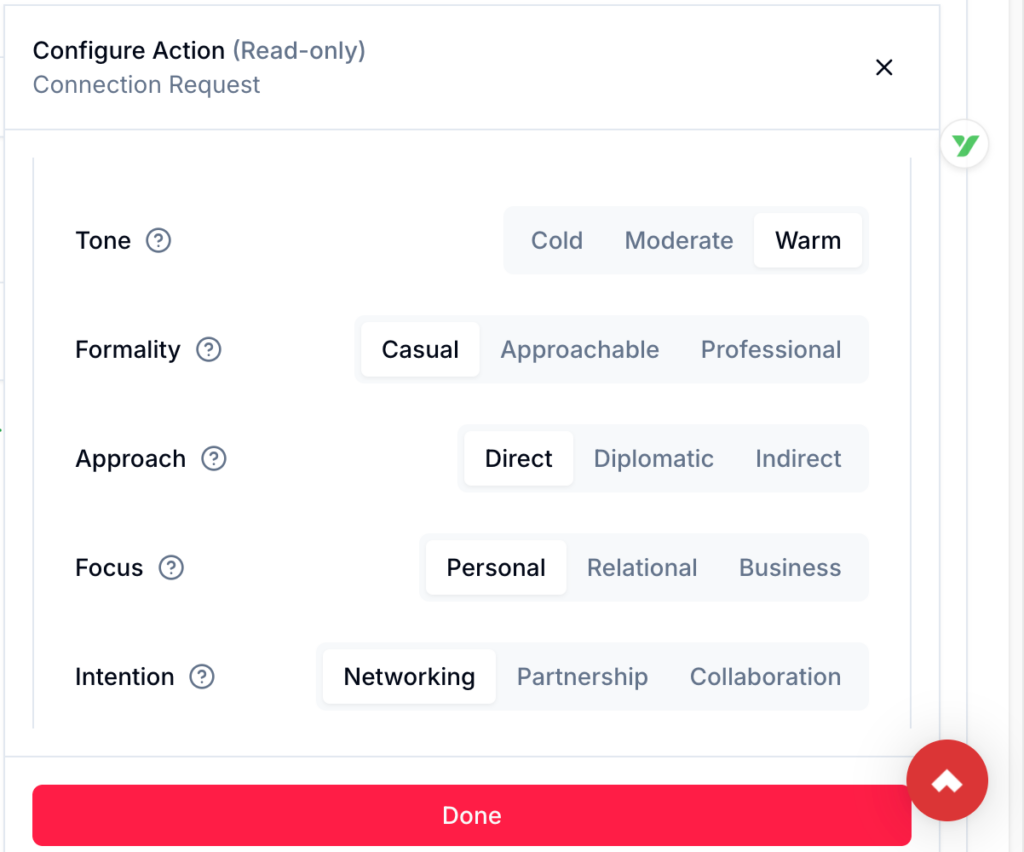
The difference between “We provide enterprise-grade solutions for optimizing sales workflows” and “We help sales teams close deals faster” isn’t just length. It’s whether your prospect thinks you’re speaking their language or reading from a script.
5. Build Personalized Value Propositions With AI
Generic value props die in DMs.
“We help companies increase productivity” tells your prospect nothing about why they should care. It’s the business equivalent of “thoughts and prayers”—acknowledging the problem without actually addressing it.
AI maps pain points by analyzing profile information, company news, and industry trends. A VP of Sales at a Series B startup faces different challenges than a Sales Director at an enterprise company. AI creates custom benefit statements that speak to specific situations. According to Gartner, by 2030, 75% of B2B buyers will prefer sales experiences that prioritize human interaction over AI—making personalized value propositions that sound genuinely human more critical than ever.
For the startup VP: “Teams scaling from 5 to 20 reps often struggle with process consistency—we solve that.”
For the enterprise director: “Most Fortune 500 sales orgs lose 30% efficiency to manual research. Our platform recovers that time.”
Same product. Completely different relevance.
6. Generate Multiple Message Variations and A/B Test Them
You can’t improve LinkedIn outreach reply rates if you’re sending the same message to everyone.
Even within the same persona, different hooks work for different people. Some respond to questions. Others to industry insights. A few to direct value propositions.
AI generates three to five variations of your core message, testing different openings, value props, and CTAs. One version leads with a question. Another references shared connections. A third opens with industry insight. The top LinkedIn automation tools make this testing process seamless and scalable.
Data emerges. Maybe question-based openers get eighteen percent more replies. Maybe shorter messages (under fifty words) outperform longer ones by forty percent.
You’d never know without testing. And AI makes testing effortless at scale.
7. Use AI to Personalize Follow-ups (Without Sounding Pushy)
Most conversations need multiple touches.
Follow-up messages actually increase total reply rates to 7.66% from 4.19% first-touch rates. The challenge? Following up without sounding desperate or pushy.
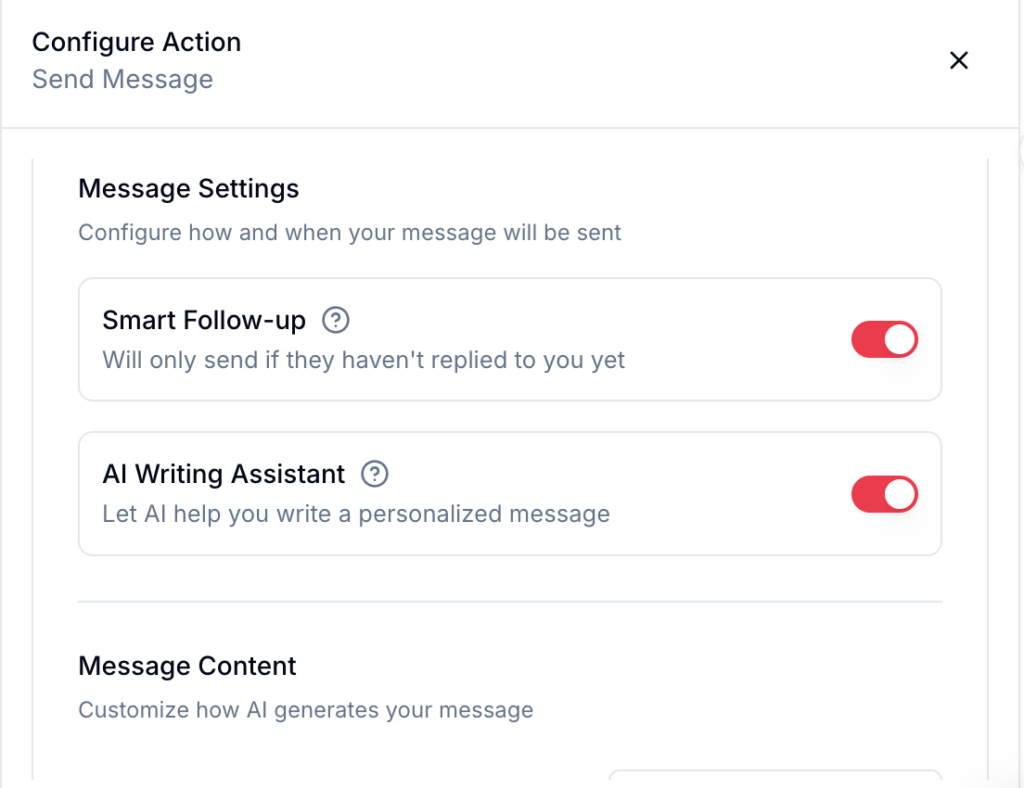
AI automation creates human-friendly follow-ups that reference previous context. “Following up on my message about scaling challenges—curious if this is top of mind for your team right now?”
The key is data-driven timing. AI analyzes when prospects are most active on LinkedIn, scheduling follow-ups for maximum visibility. Tuesday and Monday show the highest reply rates at 6.90% and 6.85%, while weekend messages drop to 6.40%.
Translation: Don’t follow up on Saturday. Even if you’re working, they’re not.
8. Craft Icebreakers Using AI Research from External Sources
LinkedIn profiles tell part of the story.
AI research from podcasts, press releases, YouTube interviews, and conference appearances fills in the rest. Your prospect was recently featured on an industry podcast discussing market consolidation? That’s your opener.
“Listened to your episode on the Sales Enablement podcast—your take on consolidation matched what we’re seeing with our clients.”
This B2B sales automation approach transforms cold outreach into warm conversation. It shows you invested time understanding them beyond their title. And it works because you’re referencing something they’re actually proud of—not just scraping their LinkedIn headline.
9. Segment Your Audience With AI and Build Message Paths
Not all prospects need the same journey.
LinkedIn outreach segmentation creates targeted pathways based on role, company size, industry, and buying signals. CEOs care about ROI and strategic outcomes. Sales leaders want team productivity and pipeline metrics. HR and talent teams focus on recruitment efficiency.
Each segment gets message paths built for their priorities.
AI analyzes which segments respond to which approaches, optimizing over time. AI-driven lead scoring and qualification enables this level of intelligent segmentation, identifying not just who fits your ICP but who’s actually ready to engage.
Enterprise contacts might need three touchpoints before booking a call. SMB prospects might convert after one strong message. Same product, different cadence.
10. Use “Soft Outreach” Messages That Build Trust First
The hardest close often starts with no pitch at all.
Warm outreach and social selling LinkedIn strategies prioritize relationship over transaction. Ask a question: “What’s your take on the new LinkedIn algorithm changes?” Reference their post: “Your analysis on AI in sales was spot-on—we’re seeing the same trends.”
Offer a resource: “Wrote a breakdown of the new data privacy regulations—thought it might be useful for your team.”
These conversational starters feel non-threatening because they are. You’re adding value before asking for anything. AI helps identify which soft approach fits each prospect’s engagement style.
The best part? When you do eventually pitch, you’re not a stranger anymore.
Best Practices to Avoid AI-Sounding Messages
LinkedIn outreach best practices in 2025 require balancing AI efficiency with human authenticity.
Keep messages short. Under a hundred words for initial outreach. Attention spans on LinkedIn are measured in seconds, not minutes. If they wanted to read an essay, they’d subscribe to your newsletter.
Maintain natural human imperfection. Perfect grammar and flawless structure can trigger “AI-generated” alarms. A conversational tone with slight informality feels more genuine. Real people use sentence fragments. They start sentences with “And” or “But.” They write how they talk.
Avoid over-automating connection requests. LinkedIn limits exist for a reason. Too many rapid-fire requests trigger spam flags and account restrictions. Quality over quantity isn’t just advice—it’s platform policy.
Common Mistakes to Avoid in AI-Personalized LinkedIn Outreach
Even with AI, execution errors kill campaigns.
Overusing templates reveals the automation. If ten prospects receive messages with identical structure—just names swapped—they’ll notice. LinkedIn isn’t email. People actually read these messages.
Using irrelevant personalization backfires spectacularly. Mentioning someone’s marathon completion when pitching enterprise software feels creepy, not clever. Personalization must connect to the business context. Otherwise, you’re just proving you can use Google.
Pitching too fast destroys trust. Lead with insight, not product. The goal is conversation, not immediate conversion. Learn more about these and other dangerous outreach mistakes that silently drain your pipeline.
Conclusion: AI Makes LinkedIn Outreach Smarter, Not Less Human
AI personalization doesn’t replace authentic connection.
It enables more of it.
The best LinkedIn outreach in 2025 combines AI’s research speed and pattern recognition with human judgment about what actually matters. Tools find the signal. Humans craft the message. Together, they create outreach that feels personal because it is.
Ready to transform your LinkedIn outreach strategy? Learn how Gro’s AI sales automation delivers personalized, multi-channel campaigns that don’t sound like templates. The technology exists. The only question is whether you’ll use it to build genuine conversations or just more noise.
The answer determines whether your messages get opened—or ignored.
